Why Google Ads Is Not Working: Causes, Fixes and Checklist
What Is Google Ads?
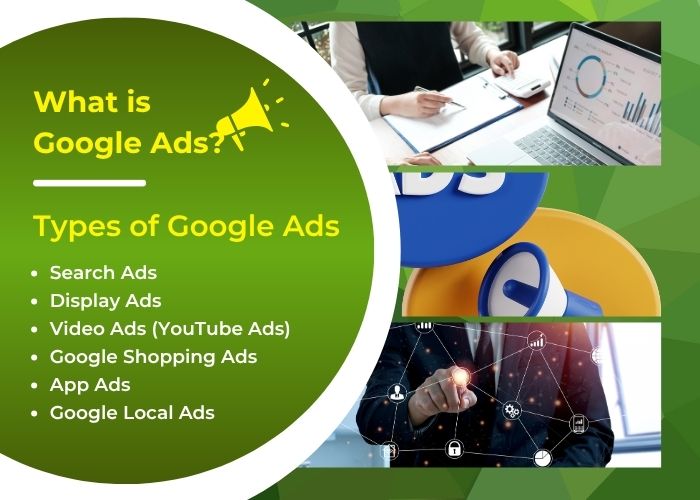
Google Ads is an online advertising platform that allows businesses to promote products and services across Google Search, YouTube, websites, apps, maps, shopping results, and other Google properties.
Depending on the campaign type and bidding strategy, advertisers may pay for clicks, impressions, video views, or conversions. Therefore, Google Ads should not be described exclusively as a pay-per-click platform.
Businesses can use Google Ads to:
- Reach users actively searching for products or services
- Increase website traffic
- Generate enquiries and phone calls
- Promote local stores
- Sell products online
- Build brand awareness
- Reconnect with previous website visitors
Whether a business runs an international campaign or targets Google Ads audiences in Vietnam, campaign success depends on accurate targeting, suitable bidding, strong advertising content, useful landing pages, and reliable conversion tracking.
What Does It Mean When Google Ads Is Not Working?
The phrase “Google Ads is not working” may describe several different problems:
- The campaign receives no impressions.
- The ads show only occasionally.
- The campaign receives impressions but no clicks.
- The ads receive clicks but no enquiries or sales.
- The campaign generates conversions at an unprofitable cost.
- The account, campaign, ad group, keyword, or advertisement has been suspended or disapproved.
Each problem requires a different diagnosis. Increasing the budget will not fix a disapproved advertisement, while rewriting an advertisement will not solve a broken conversion tag.
How to Check Whether Google Ads Is Running
1. Check the Account Status
Before reviewing individual campaigns, confirm that the complete account is eligible to serve ads.
Check for:
- Account suspension
- Billing verification
- Identity or advertiser verification
- Security restrictions
- Failed payments
- Outstanding balances
- Policy notifications
If the account itself is restricted, changing keywords or bids will not restore delivery.
2. Check the Date Range and Filters
Many apparent reporting problems are caused by an incorrect date range or active filter.
Confirm that:
- The selected period includes the campaign’s active dates.
- No filter is hiding campaigns or advertisements.
- The correct account is selected.
- The campaign was active during the reporting period.
- Reporting columns are configured correctly.
3. Use the Ad Preview and Diagnosis Tool
For Search campaigns, use the Ad Preview and Diagnosis Tool instead of repeatedly searching for your own advertisement on Google.
The tool can help identify whether an advertisement may be eligible for a specific:
- Search query
- Location
- Language
- Device
- Audience context
It may also indicate issues such as:
- Campaign or ad group not enabled
- Keyword not matching the query
- Low Ad Rank
- Budget limitations
- Location mismatch
- Negative-keyword conflict
- Advertisement under review or disapproved
The tool simulates a specific search scenario. An advertisement not appearing in one test does not necessarily mean it never appears in any auction.
4. Review Status Columns
Review the status of each level:
- Account
- Campaign
- Ad group
- Advertisement
- Keyword
- Asset
- Product or feed item when applicable
Common statuses may include:
- Eligible
- Eligible, limited
- Paused
- Removed
- Under review
- Disapproved
- Limited by budget
- Low search volume
- Below first-page bid estimate
Read the detailed explanation associated with each status instead of relying only on its color or icon.
5. Check Impressions Before Clicks or Conversions
Use the following diagnostic sequence:
- No impressions: Investigate eligibility, targeting, search volume, bids, budget, policy, and Ad Rank.
- Impressions but no clicks: Investigate advertisement relevance, offer, message, position, and search intent.
- Clicks but no conversions: Investigate tracking, landing pages, traffic quality, pricing, trust, and conversion flow.
- Conversions but poor profitability: Investigate cost per conversion, conversion value, bidding, keyword quality, and customer value.
Why Google Ads May Not Be Showing
1. The Campaign or Ad Group Is Paused
Cause: The campaign, ad group, advertisement, or keyword may be paused or removed.
How to fix it:
- Review the status at every account level.
- Enable only the components you intend to run.
- Confirm that the campaign start date has passed.
- Check whether an end date has already been reached.
2. Account or Payment Problem
Cause: Ads may stop serving because of a failed payment, exhausted prepaid balance, billing verification, account suspension, or security restriction.
How to fix it:
- Open the Billing section.
- Review payment alerts.
- Update the payment method when required.
- Complete advertiser or billing verification.
- Follow the appropriate appeal process for a suspension.
3. The Campaign Is Limited by Budget
Cause: The campaign’s average daily budget may be insufficient to participate in all available auctions.
A limited budget does not always mean the campaign stops completely. Google may distribute delivery throughout the day or enter fewer auctions.
How to fix it:
- Review the “Limited by budget” status.
- Check Search lost impression share due to budget when available.
- Identify campaigns and keywords producing valuable conversions.
- Reduce spending on low-value traffic before increasing the budget.
- Adjust schedules, locations, devices, or audiences when justified by data.
- Increase the budget only when additional traffic is commercially valuable.
4. Low Ad Rank
Cause: An advertisement may not meet the threshold required to participate or appear prominently in a particular auction.
Ad Rank is influenced by factors such as:
- The bid
- Auction-time ad quality
- Ad Rank thresholds
- Competition in the auction
- The user’s search context
- The expected effect of ad assets and formats
How to fix it:
- Improve the relationship between the keyword, advertisement, and landing page.
- Write clearer and more relevant advertisements.
- Improve the landing-page experience.
- Add useful ad assets.
- Review bids and bidding targets.
- Avoid overly restrictive targeting.
5. Misunderstanding Quality Score
Quality Score is a diagnostic score available for eligible Search keywords. It helps compare expected click-through rate, ad relevance, and landing-page experience with other advertisers.
The displayed score from 1 to 10 is not a direct auction input and should not be treated as the campaign’s primary performance metric.
Use it to identify areas that may require improvement:
- Expected CTR: Whether the advertisement is likely to attract a click.
- Ad relevance: How closely the advertisement matches the keyword’s intent.
- Landing-page experience: Whether the destination is relevant, usable, and helpful.
Do not optimize the numerical score while ignoring conversions and profitability.
6. The Advertisement Is Under Review
Cause: New or edited advertisements and assets usually need to complete a policy review before full delivery.
How to fix it:
- Check the advertisement status.
- Avoid making repeated unnecessary edits because each change may trigger another review.
- Confirm that the campaign and ad group are enabled.
- Review policy requirements before submitting.
- Contact support when the review remains unresolved for an unusually long period.
7. The Advertisement or Asset Is Disapproved
Cause: The advertisement, destination, asset, or product may violate Google Ads policies.
Possible issues include:
- Misleading claims
- Prohibited or restricted products
- Unsupported capitalization or punctuation
- Malware or compromised destinations
- Destination mismatch
- Broken landing pages
- Missing required business information
How to fix it:
- Read the exact policy reason.
- Review both the advertisement and landing page.
- Correct the violation.
- Resubmit or appeal only when appropriate.
Do not repeatedly appeal without addressing the actual issue.
8. The Keyword Has Low Search Volume
Cause: A keyword may receive very few searches in the selected language, location, and network.
How to fix it:
- Check whether the keyword is overly specific.
- Use relevant variations with genuine search demand.
- Review match types.
- Broaden location targeting only when the business can serve that area.
- Do not add unrelated high-volume keywords simply to generate impressions.
9. Negative Keywords Block Valid Searches
Cause: A negative keyword may prevent the intended keyword or search term from triggering an advertisement.
How to fix it:
- Review account, campaign, and ad-group negative keywords.
- Check negative-keyword lists.
- Review negative match types.
- Remove negatives that unintentionally block valuable searches.
10. Targeting Is Too Narrow
Cause: Multiple restrictions may reduce the eligible audience too much.
Examples include:
- A very small location
- A narrow audience combined with keywords
- Limited devices
- Short advertising schedules
- Strict demographic exclusions
- Language settings that do not match users
How to fix it:
- Review every targeting layer.
- Remove unnecessary restrictions.
- Confirm that the location options match the business goal.
- Expand targeting gradually and monitor traffic quality.
11. The Ad Schedule Prevents Delivery
Cause: Advertisements may be scheduled only for certain days or hours.
How to fix it:
- Check the account time zone.
- Review the ad schedule.
- Confirm business hours and call-handling availability.
- Use performance data before excluding large time periods.
12. Location Targeting Does Not Match the Searcher
Cause: The user may be outside the target region, or location settings may not match the campaign’s intended audience.
How to fix it:
- Review included and excluded locations.
- Check advanced location options.
- Confirm that the landing page serves the target area.
- Use the Ad Preview and Diagnosis Tool with the intended location.
13. The Bid Strategy or Target Is Too Restrictive
Cause: A very low target CPA, very high target ROAS, low CPC limit, or insufficient conversion data may restrict participation in auctions.
How to fix it:
- Review the bidding-strategy status.
- Check whether the target reflects recent performance.
- Verify conversion tracking.
- Allow appropriate learning time after major changes.
- Avoid changing bids, targets, budgets, and targeting repeatedly at the same time.
14. The Landing Page Is Unavailable or Poorly Matched
Cause: The destination may load slowly, return an error, redirect unexpectedly, fail on mobile, or provide content unrelated to the advertisement.
How to fix it:
- Confirm that the page returns a successful response.
- Test it on mobile and desktop.
- Improve page speed.
- Match the page content to the advertisement and keyword.
- Make pricing, contact details, and calls to action clear.
- Remove intrusive elements that block the main content.
15. Search Demand or Auction Conditions Have Changed
Cause: Search demand, seasonality, competition, user behavior, and auction conditions can change over time.
How to fix it:
- Compare performance with previous periods.
- Review search trends and seasonality.
- Check auction insights.
- Update offers and messages when market conditions change.
- Avoid assuming every performance decline is a technical error.
Why Google Ads May Show but Not Generate Results
1. Keywords Do Not Match Commercial Intent
A campaign may receive traffic from users seeking free information, jobs, tutorials, definitions, or unrelated services.
Review the Search Terms report to identify what users actually searched before clicking.
2. The Advertising Message Is Not Compelling
An advertisement may be relevant but fail to communicate a strong reason to click.
Effective advertisements may highlight:
- A specific product or service
- A clear benefit
- Price or offer information
- Delivery or service area
- Warranty or support
- A suitable call to action
Avoid exaggerated or unverifiable claims.
3. The Landing Page Does Not Support Conversion
Users may click but leave when the landing page:
- Loads slowly
- Does not match the advertisement
- Has unclear pricing
- Lacks trust signals
- Uses a complicated form
- Does not work on mobile
- Provides no obvious next step
4. Conversion Tracking Is Missing or Incorrect
A campaign cannot be optimized reliably when meaningful actions are not measured.
Possible conversions include:
- Purchases
- Form submissions
- Qualified phone calls
- Appointment bookings
- Account registrations
- Downloads
- Offline sales
Check for duplicate tags, missing tags, incorrect values, accidental page-view conversions, and unqualified micro-conversions being treated as primary business outcomes.
5. Traffic Is Not Profitable
A campaign may generate conversions while still losing money.
Evaluate:
- Cost per conversion
- Conversion value
- Return on ad spend
- Gross margin
- Lead quality
- Sales close rate
- Customer lifetime value
How the Google Ads Auction Works
For Search campaigns, an auction may occur when a user submits a relevant search.
The general process is:
- Google identifies advertisements that may match the search.
- Ineligible advertisements are filtered out.
- Eligible advertisements are evaluated using Ad Rank.
- Google determines whether and where advertisements may appear.
- The advertiser may pay when the required billable action occurs.
Ad Rank is not determined only by the highest bid. Auction-time quality, competition, search context, thresholds, and expected asset impact can also influence the result.
How to Optimize a Google Ads Campaign
Step 1: Define the Business Objective
Choose the result the campaign should produce:
- Online sales
- Qualified leads
- Phone calls
- Store visits
- Bookings
- Brand awareness
Do not optimize solely for clicks when the business needs revenue or qualified enquiries.
Step 2: Set Up Accurate Conversion Tracking
Before scaling the campaign:
- Track primary business conversions.
- Assign values when appropriate.
- Remove duplicate conversion actions.
- Test tags and events.
- Connect offline outcomes when possible.
- Distinguish primary and secondary actions.
Step 3: Build a Logical Campaign Structure
Separate campaigns or ad groups when they have different:
- Budgets
- Locations
- Products or services
- Profit margins
- Conversion goals
- Landing pages
- Scheduling requirements
A clear structure makes performance easier to analyze and control.
Step 4: Select Relevant Keywords
Use keyword research to understand:
- Search intent
- Demand
- Competition
- Estimated cost
- Product or service relevance
- Geographic differences
Use match types intentionally and monitor the real search terms generated by the campaign.
Step 5: Build Negative Keyword Lists
Negative keywords can reduce irrelevant traffic.
Potential categories may include:
- Free
- Jobs and recruitment
- Training or courses
- Do-it-yourself searches
- Unserved locations
- Unrelated product types
Review each term carefully. A broad negative may unintentionally block valuable searches.
Step 6: Write Relevant Responsive Search Ads
Create assets that:
- Match the user’s search intent
- Describe the actual offer
- Highlight meaningful benefits
- Use clear calls to action
- Remain consistent with the landing page
- Comply with advertising policies
Including a keyword can improve relevance when it reads naturally, but it should not make the advertisement repetitive or awkward.
Step 7: Add Useful Ad Assets
Depending on eligibility and campaign type, consider:
- Sitelinks
- Callouts
- Structured snippets
- Call assets
- Location assets
- Price assets
- Promotion assets
- Image assets
- Lead-form assets
Assets should provide additional useful information rather than repeat the same message.
Step 8: Create a Relevant Landing Page
The landing page should:
- Match the advertisement and search intent
- Load quickly
- Work on mobile devices
- Explain the offer clearly
- Provide trust information
- Use a visible call to action
- Minimize unnecessary form fields
- Protect user information
Step 9: Select a Suitable Bidding Strategy
The bidding strategy should match the campaign objective and available data.
Possible objectives include:
- Clicks
- Conversions
- Conversion value
- Impression share
- Video views
Automated bidding depends heavily on accurate conversion data. Do not evaluate a strategy using broken or low-quality tracking.
Step 10: Monitor Search Terms and Traffic Quality
Review:
- Which searches triggered advertisements
- Which terms generated conversions
- Which terms wasted budget
- Whether match types are too broad or restrictive
- Whether new negative keywords are required
Step 11: Review Impression Share
For eligible campaigns, impression-share metrics can help explain lost visibility.
Review:
- Search impression share
- Search lost impression share due to budget
- Search lost impression share due to rank
- Search top impression rate
- Search absolute top impression rate
Do not pursue maximum impression share when the additional traffic is unprofitable.
Step 12: Test Methodically
Test meaningful changes such as:
- Advertising messages
- Landing-page offers
- Calls to action
- Keyword groups
- Bidding targets
- Audience signals
Avoid changing many variables simultaneously, because this makes it difficult to determine what caused the result.
Google Ads Diagnostic Checklist
Account Level
- The account is active.
- Billing is valid.
- Required verification is complete.
- No suspension or security restriction is present.
Campaign Level
- The campaign is enabled.
- Start and end dates are correct.
- The budget is available.
- The bidding strategy is active.
- Locations and languages are correct.
- The advertising schedule permits delivery.
Ad Group and Keyword Level
- The ad group is enabled.
- Keywords are eligible.
- Keywords have sufficient relevance and demand.
- Negative keywords do not block valid traffic.
- Bids or targets are not overly restrictive.
Advertisement and Asset Level
- Advertisements are approved.
- Assets are approved.
- The destination URL works.
- The advertisement matches the keyword and landing page.
- The offer and call to action are clear.
Measurement Level
- Conversion tracking works.
- Primary conversions represent meaningful business results.
- Conversion values are accurate.
- Phone calls and offline outcomes are tracked when relevant.
- Analytics and Google Ads data are reviewed together.
Common Google Ads Mistakes
- Searching repeatedly for your own advertisement
- Assuming an eligible status guarantees an impression in every search
- Increasing the budget before checking traffic quality
- Optimizing only for the Quality Score number
- Ignoring search terms
- Using broad targeting without negative keywords
- Sending every advertisement to the homepage
- Running campaigns without conversion tracking
- Counting low-value actions as primary conversions
- Making major changes every day
- Judging campaigns only by clicks
- Ignoring profit margins and lead quality
Frequently Asked Questions About Google Ads Not Showing
Why Is My Advertisement Eligible but Not Showing?
Eligible means the advertisement may participate when relevant conditions are met. It does not guarantee entry into or success in every auction. Budget, bids, auction-time quality, competition, search context, targeting, and demand can affect delivery.
Should I Search Google to See My Own Advertisement?
Use the Ad Preview and Diagnosis Tool instead. Repeated self-searching can create impressions without clicks and still does not reproduce every user’s location, device, history, and auction context.
How Long Does Google Take to Review an Advertisement?
Most advertisements are reviewed within approximately one business day, but complex cases may take longer. Editing an advertisement can restart the review process.
Does a Higher Budget Guarantee More Sales?
No. A larger budget can make more traffic available, but sales depend on targeting, offer quality, search intent, advertisements, landing pages, tracking, and conversion performance.
Does a High Quality Score Guarantee the Top Position?
No. The displayed Quality Score is a diagnostic metric rather than a direct auction input. Each auction evaluates several real-time factors, including quality, bids, competition, context, and thresholds.
Why Do I Have Clicks but No Conversions?
Possible reasons include irrelevant search terms, weak landing pages, poor mobile usability, high prices, unclear offers, broken forms, missing tracking, or users who are not ready to purchase.
Should I Increase My Bid When Ads Do Not Show?
Only after identifying the cause. A higher bid may help when Ad Rank is insufficient, but it will not fix policy violations, billing issues, low search volume, incorrect targeting, or blocked keywords.
Can Slow Page Speed Stop Ads From Showing?
A slow or unreliable landing page can weaken the user experience and campaign performance. However, page speed is only one part of diagnosis. Check advertisement status, policy, targeting, bids, budget, and destination availability as well.
Why Did My Campaign Suddenly Stop Receiving Impressions?
Review recent changes to budget, bidding, targets, ads, policy status, billing, schedule, locations, negative keywords, search demand, and conversion tracking. Also compare the current reporting period with previous periods.
Conclusion
When Google Ads appears not to be working, begin by defining the actual problem. A campaign with no impressions requires a different solution from one receiving clicks but producing no sales.
A reliable diagnostic process should review:
- Account and billing status
- Campaign and ad-group eligibility
- Advertisement and asset approval
- Keyword demand and negative keywords
- Budget, bids, and Ad Rank
- Location, schedule, audience, and device targeting
- Landing-page relevance and performance
- Conversion tracking and business profitability
Effective Google Ads management is not simply about increasing bids or budgets. It requires matching the right user with the right offer, measuring meaningful business outcomes, and improving campaigns based on reliable data.
Viet SEO supports businesses with Google Ads account audits, campaign structure, keyword research, negative keywords, advertisement development, conversion tracking, landing-page optimization, bidding review, and performance reporting.
A properly managed campaign can help businesses reduce wasted spending, reach more qualified customers, and make advertising decisions based on revenue and conversions rather than impressions or clicks alone.



Questions & Comments
You can ask a question about this article. Viet SEO will review and reply after moderation.