UGC Governance for SEO, AEO/GEO and E-commerce: Practical Guide

User-generated content (UGC) includes customer reviews, ratings, questions and answers, comments, photos, and videos submitted by people using a product or service. For e-commerce businesses, well-managed UGC can answer buying questions, help visitors make informed decisions, and add first-hand context to product pages. It may also make useful information discoverable through traditional search and AI-powered search. However, neither publishing UGC nor adding structured data guarantees rankings, rich results, or AI citations.
This practical guide explains how to collect, moderate, license, publish, measure, and protect UGC while supporting SEO, Answer Engine Optimization (AEO), and Generative Engine Optimization (GEO).
1. Why UGC matters for SEO, AEO and GEO
UGC can provide details that product descriptions often miss: real-world usage conditions, compatibility concerns, sizing, durability, delivery experiences, and answers to specific questions. These details can improve the usefulness of a page when they are authentic, relevant, and easy to find.
- SEO: helpful reviews and Q&A may expand the range of relevant questions answered on a page and support purchase decisions.
- AEO/GEO: clear, publicly accessible answers can give search and AI systems additional context, but appearance or citation depends on each system's retrieval and ranking behavior.
- Conversion: verified purchaser experiences and balanced feedback can help visitors evaluate products; any incremental uplift must be tested rather than assumed.
- Product improvement: recurring complaints and questions can reveal missing specifications, content gaps, or operational problems.
Editorial rule: distinguish user opinions from verified product facts. A customer comment is not automatically an authoritative technical or medical claim.
2. Choose the right UGC formats and page placements
| UGC format | Best placement | Key control |
|---|---|---|
| Product reviews and ratings | Individual product pages | Authenticity, incentives, rating integrity |
| Customer questions and answers | Product support or product detail sections | Accurate answers, clear respondent identity |
| Customer photos and videos | Product galleries and review sections | Media rights, consent, privacy screening |
| Community discussions | Dedicated discussion or support pages | Spam controls, moderation and crawlability |
| Post-purchase feedback | Internal research; selectively published with permission | Purpose limitation and evidence of permission |
Do not merge reviews for unrelated products into a single aggregate rating, and do not present editorial testimonials as independent buyer reviews.
3. Design a trustworthy collection strategy
When and how to request contributions
- Choose an appropriate moment: invite feedback after delivery or after customers have had reasonable time to use the product.
- Ask specific questions: what was the product used for, what worked well, and what could be improved?
- Support balanced responses: invite positive and negative experiences without requiring a high rating.
- Keep forms lightweight: rating, comment, optional use case, and optional media upload; request only information necessary for the purpose.
- Provide an accessible route: mobile-friendly inputs, clear errors, and alternative means to report problems.
Any incentives should be disclosed clearly and should not be conditioned on favorable ratings. Applicable consumer-protection and platform rules may prohibit certain incentives or promotional practices even when disclosed; verify them before launch.
What contributors should see before submitting
- What content may be displayed publicly and whether a display name will appear.
- How the submission may be reused, for example on product pages or marketing channels.
- What personal information is collected, why it is needed, and how requests to access or delete it are handled.
- Rules against impersonation, spam, deceptive reviews, unlawful uploads, and third-party personal data without a lawful basis.
4. Implement a moderation workflow with human accountability
A workable pipeline is submit → validate → scan → review when needed → approve or reject → publish → monitor. Automated scanning is a triage aid, not proof that content is safe or accurate.
| Status | Meaning | Next action |
|---|---|---|
| Pending | Submission received | Check file type, rate limits, required fields |
| Flagged | Potential spam, personal data, infringement or harmful claim | Quarantine and assign a moderator |
| Approved | Meets publication rules | Publish with appropriate display fields |
| Rejected | Violates documented policy | Record reason and offer appeal where appropriate |
| Removed | Previously published content withdrawn | Record reason, update page and markup |
Escalate these cases to human review
- Suspected fake reviews, coordinated manipulation, threats, discriminatory abuse, or repetitive spam.
- Visible phone numbers, addresses, order details, identity documents, or third-party personal data.
- Unlicensed images, music, logos, or other third-party media.
- Claims involving health, safety, legal rights, product certification, or potentially dangerous use.
- Requests for removal, copyright complaints, or disputed factual statements.
Document internal response targets according to risk level and staffing capacity; do not promise a universal 48- or 72-hour resolution time unless the team can meet it.
5. Apply structured data correctly
Structured data describes content already visible on the page; it is not a substitute for credible content or a guarantee of enhanced search display.
| Markup | Suitable use | Common mistake |
|---|---|---|
Review |
Genuine review of a specific eligible item | Marking up fabricated or unrelated reviews |
AggregateRating |
Visible aggregate of genuine ratings for a specific item | Combining scores across unrelated products or external sites |
QAPage |
A dedicated page focused on one question where users can submit answers | Applying it to a product page containing many separate questions |
Product |
Eligible product details with consistent visible information | Publishing ratings or offers that contradict page content |
For a standard product page with multiple customer questions, use ordinary accessible HTML for those questions. Do not assign QAPage to the entire product page merely because a Q&A widget exists. Check the current Google Search Central eligibility guidelines before deploying schema.
Important: Google's rules for self-serving reviews restrict review-star eligibility for certain organization and local-business pages. Review data should reflect genuine user submissions and should not be selectively altered to improve ratings.
6. Make large UGC sections accessible to users and crawlers
- Render approved, relevant content in crawlable HTML or ensure it becomes available through accessible links and rendering.
- For long review sections, provide stable paginated URLs and real
<a href>links; infinite scrolling should have a crawlable pagination alternative. - Give each substantive paginated page an appropriate canonical URL based on its own content. Do not automatically canonicalize every page to page one.
- Do not create indexable pages for empty filters, thin spam archives, or endless URL parameters without a clear SEO purpose.
- Make review updates consistent with visible dates and avoid presenting user-submitted updates as editorially verified facts.
7. Manage media rights and content provenance
- Confirm permission: contributors must accept understandable terms granting the site the rights actually needed to display or reuse their submissions.
- Scope the license: specify publication channels, permitted edits, duration, and any promotional reuse. A website display license does not automatically permit every advertising use.
- Record evidence: store the accepted terms version, submission time, asset identifier, uploader account where appropriate, and moderation decision.
- Check third-party rights: uploaded files may contain copyrighted music, logos, portraits, or third-party footage.
- Handle disputes: establish a visible contact route and a review process aligned with relevant laws and provider requirements.
Do not treat watermarking as a replacement for obtaining rights. Retain only the evidence necessary for a defensible operational purpose and restrict access to audit records.
8. Protect privacy and prevent abuse
- Collect only necessary personal information and explain its purpose.
- Scan and redact sensitive identifiers before publication; allow moderator review of uncertain cases.
- Validate upload file types, scan for malicious files, control file size, and store uploads outside executable paths.
- Apply proportionate rate limits and anti-bot measures without unnecessarily blocking genuine users.
- Define retention periods, access permissions, appeal channels, and procedures for withdrawal or deletion requests under applicable law.
- Separate consent for processing personal data from a license to display copyrighted submissions; these are different legal questions.
9. Measure UGC quality, search performance and business outcomes
| Metric | Why it matters | Measurement note |
|---|---|---|
| Submission and approval rate | Contributor participation and moderation workload | Segment by product, channel and reason for rejection |
| Verified purchase share | Review context and authenticity | A verified-purchase label must reflect real order checks |
| Answer coverage | Unanswered recurring customer questions | Review top support queries and product concerns |
| Organic performance | Clicks, impressions, landing-page queries | Use Google Search Console; account for reporting delay |
| Engagement and conversions | Useful interactions and commercial outcomes | Use GA4 or equivalent; establish a comparison baseline |
| AI references | Possible inclusion of UGC in AI-generated answers | Record prompt, date, platform, location if known and cited URL; do not equate citations with conversions |
To estimate business impact, test meaningful alternatives such as review placement or Q&A usability. Predetermine the primary metric and sample requirements. A before-and-after comparison alone cannot establish that UGC caused an uplift.
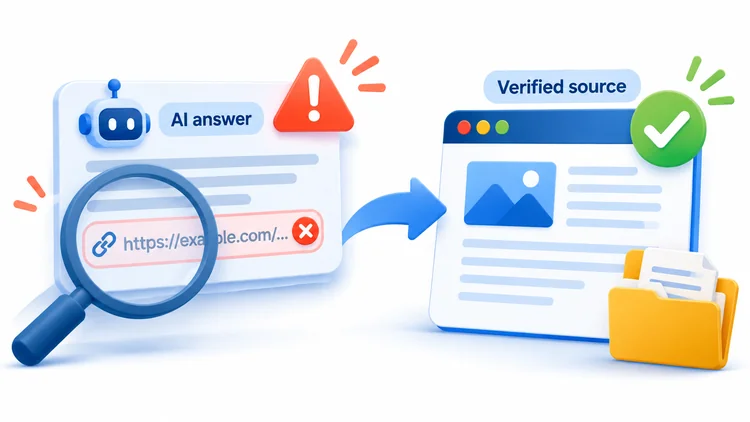
10. Respond to harmful UGC or incorrect AI citations
- Preserve evidence: capture the affected URL, text, platform response, timestamps and public context without collecting unnecessary personal data.
- Identify the source: determine whether the issue originated in UGC, an editorial summary, a cached copy, or an AI-generated interpretation.
- Reduce harm: temporarily hide harmful material where justified; correct verified errors without silently falsifying legitimate reviews.
- Escalate: involve content, support, legal and security teams according to severity; use provider reporting channels where available.
- Document and monitor: retain the decision and follow-up evidence. A corrected source page does not guarantee immediate changes in an AI answer.
11. Pre-launch UGC implementation checklist
- Published contribution policy, license terms and privacy notices reviewed.
- Submission forms tested on mobile and desktop, with clear validation messages.
- Spam, file safety, personal data and infringement checks configured.
- Human moderation roles, statuses, escalation and appeal steps documented.
- Approved content visible and accessible; rejected content excluded from public pages and schema.
- Review, AggregateRating and QAPage eligibility checked per page type.
- Pagination, canonical URLs and internal links tested.
- Analytics events, Search Console baselines, and incident logs configured.
- Retention, access controls and removal processes approved by the relevant owners.
12. Frequently asked questions
Does UGC automatically improve SEO rankings?
No. Authentic, useful UGC may add relevant context and improve the user experience, but its presence alone does not establish higher rankings. Low-quality or manipulative submissions can create risks instead.
Will AI search engines cite customer reviews?
They may reference publicly accessible information, but there is no reliable guarantee that a specific review will be retrieved, quoted, or linked. Monitor a fixed sample of important questions rather than claiming universal AI citation gains.
Should every product Q&A section use QAPage schema?
No. Google's QAPage guidance is intended for pages centered on a single question with answers that users can contribute. A product page containing multiple independent Q&A entries is not automatically eligible.
Can businesses reward customers for reviews?
Rules vary by platform and jurisdiction. Never condition rewards on positive ratings or conceal material incentives. Check applicable policies and consumer-protection requirements before offering incentives.
Does a contributor's agreement eliminate all copyright risks?
No. A contributor may upload material belonging to another party or containing someone else's personal information. Terms, file checks and a dispute process should work together.
Conclusion
Effective UGC governance combines trustworthy collection, accountable moderation, clear licenses, privacy protection, correct structured data, crawlable page design and measurable business outcomes. Treat user contributions as valuable experience-based context, not unverified proof. A repeatable editorial and technical workflow is more useful for long-term SEO, AEO and GEO than simply increasing the number of reviews.
Implementation note: final license wording, retention periods, moderation service levels and local legal requirements must be approved by the relevant teams before production rollout.



Questions & Comments
You can ask a question about this article. Viet SEO will review and reply after moderation.