Building a Pillar–Cluster Content Hub for SEO, AEO & GEO
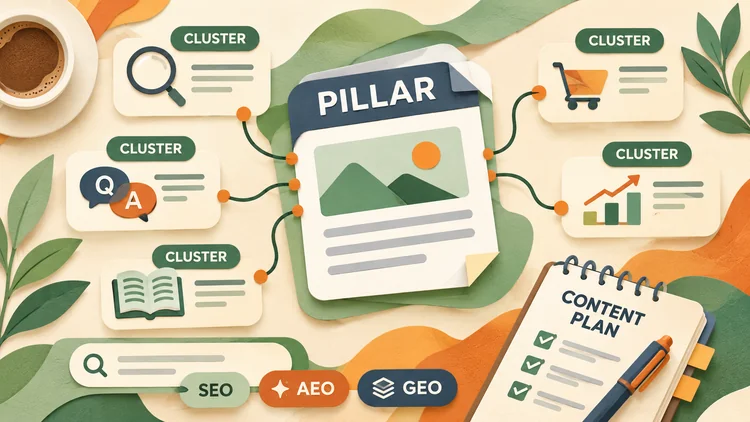
A content hub is a connected collection of pages organized around a core subject. A comprehensive pillar page introduces the topic and helps readers navigate to cluster pages that answer more specific questions. Done well, this structure supports useful navigation, contextual internal linking, and a clear editorial plan for SEO, AEO (Answer Engine Optimization), and GEO (Generative Engine Optimization).
However, a pillar–cluster structure does not by itself guarantee rankings or citations in AI-generated answers. Its value comes from publishing accurate, original, accessible content that directly addresses the needs of real readers.
What Is a Pillar–Cluster Content Hub?
The pillar page serves as a main guide to a broad, meaningful topic. Cluster pages cover distinct subtopics in greater depth. They link to one another where contextually relevant, especially between the pillar and its supporting pages.
- Pillar: a clear overview, major concepts, comparisons, navigation, and links to deeper resources.
- Clusters: practical tutorials, use cases, focused questions, research, and service-specific explanations.
- Supporting assets: diagrams, checklists, case studies, product pages, and carefully moderated customer questions when relevant.
For instance, a pillar on AI Search Optimization might connect to separate guides on structured data, content extractability, source verification, AI visibility measurement, and technical crawling. Each page should have a distinct purpose rather than merely repeating the pillar.
1. Select a Pillar Topic That Serves a Real Audience
Start with a topic that matches the organization's expertise, audience needs, and business goals. Do not select pillars only because keyword tools show high search volume.
- Business relevance: does the subject relate to the products, services, and decisions the organization can genuinely support?
- Search demand and intent: are there enough different questions or user journeys to justify several independent resources?
- Evidence and expertise: can you provide verified facts, firsthand examples, screenshots, original analysis, or subject-matter review?
- Content gap: can the new hub deliver information that the current site does not adequately cover?
- Maintenance: who can update prices, product features, regulations, and technical recommendations when they change?
Practical rule: create a new cluster only if the subtopic deserves its own focused page. When a subject can be answered clearly within the pillar, keep it there.
2. Research Search Intent and Audit Existing Content
Combine Google Search Console queries and landing-page data with keyword research, site search, customer support questions, sales conversations, and relevant AI-search questions. Audit existing URLs before generating new content so the hub does not create unnecessary near-duplicates.
| Intent | Reader need | Suggested asset |
|---|---|---|
| Informational | Understand a term, process, or problem | Guide, explainer, practical tutorial |
| Commercial investigation | Compare solutions and evaluate fit | Comparison, use case, methodology |
| Transactional | Request a service, quote, or purchase | Service or product page with clear CTA |
| Navigational | Find a specific brand or resource | Brand, documentation, or relevant hub page |
| Conversational / multi-step | Explore follow-up questions or constraints | Clear explanations, evidence-backed FAQs, related guides |
Group terms by underlying user need, not just linguistic similarity. Two similar phrases may belong on one page, while a broad question and a specialized implementation guide may warrant separate pages.
3. Build a Content Map and Prioritize Clusters
Create a simple planning sheet with one row per proposed page. Assign the intended audience, search intent, page role, primary question, internal links, owner, and next action.
| Page | Unique purpose | Suggested links |
|---|---|---|
| AI Search Optimization (Pillar) | Overview of SEO, AEO, GEO, and implementation choices | Links to all relevant deep dives |
| Structured Data Guide (Cluster) | Explain suitable schema types and validation | Pillar; technical SEO resources |
| AI Citation Monitoring (Cluster) | Document repeatable visibility observations and limitations | Pillar; measurement guide |
| Content Governance SOP (Cluster) | Assign editorial responsibilities and fact-checking steps | Pillar; safety or copyright resources |
| AI Search Services (Commercial) | Explain scope, process, deliverables, and contact options | Pillar; relevant evidence and service resources |
Mark every idea as create, refresh, merge, or keep. An updated existing URL may be more useful than publishing another similar article.
4. Prepare Consistent Briefs Without Making Every Page Look the Same
A brief should guide factual quality and user experience, not force identical word counts or repetitive answer blocks across the whole hub.
| Page type | Recommended brief elements |
|---|---|
| Pillar guide | Audience, topic boundaries, major questions, section outline, evidence sources, cluster navigation, relevant CTA, update owner |
| Cluster tutorial | Specific task, prerequisites, steps, examples, edge cases, screenshots, link back to pillar |
| Comparison or case study | Evaluation criteria, data source, date, limitations, methodology, practical implications |
| FAQ section | Real customer questions and direct, accurate answers, with supporting references where necessary |
| Product or service page | Clear offering, eligibility or specifications, pricing conditions when available, proof, contact or purchase action |
Concise answers are useful when they fit the question, but there is no universal 40–80 word requirement and no need to fragment every paragraph solely for AI systems. Prioritize readability and completeness.
5. Write Helpful, Verifiable Content for People and Search
- Answer the page's central question early, then provide the detail needed to act.
- Use descriptive H2/H3 headings, relevant examples, and useful tables where comparisons genuinely help.
- Attribute externally sourced claims and identify when figures or policies were last checked.
- Add firsthand experience, workflow details, screenshots, and original observations when available.
- Use consistent terms and explain acronyms at first mention.
- Make important information available in readable HTML, not solely inside images.
- Review and moderate user-generated contributions before presenting them as reliable evidence.
AEO and GEO are useful planning lenses, but neither creates a guaranteed method for an AI service to quote or link to a page. Strong technical SEO and original, reliable content remain the starting point.
6. Design Useful Internal Links and Hub Navigation
- Link from the pillar to each genuinely related cluster, using descriptive anchor text.
- Link from a cluster back to the pillar where that helps readers find broader context.
- Add cross-links between clusters when the pages explain successive steps or related decisions.
- Keep key pages reachable through normal HTML links and relevant category navigation.
- Maintain breadcrumbs when the site's hierarchy supports them.
Avoid forcing the exact keyword into every anchor, creating sitewide blocks of unrelated links, or linking every page to every other page without a reason.
7. Publish With Correct Canonicals, Language Signals, and Schema
- Canonical: distinct pillar and cluster pages should normally each have a self-referencing canonical URL. Do not canonicalize a valuable cluster to its pillar simply because they share a topic.
- Duplicates: for truly duplicate or substantially equivalent URLs, decide whether to consolidate, redirect, or canonicalize according to the page's purpose.
- Multilingual pages: use appropriate
hreflangannotations between genuine language equivalents;hreflangdoes not replace canonicalization. - Article markup: use
Articleor a more specific eligible type when accurate for the page; mark up breadcrumbs withBreadcrumbListwhen applicable. - FAQPage and QAPage: do not apply these automatically to standard blog FAQs.
QAPageis for a page devoted to a single question with possible answers; Google limits FAQ rich-result visibility to eligible sites. - Structured data integrity: schema must reflect the visible page and comply with the documentation for the specific feature.
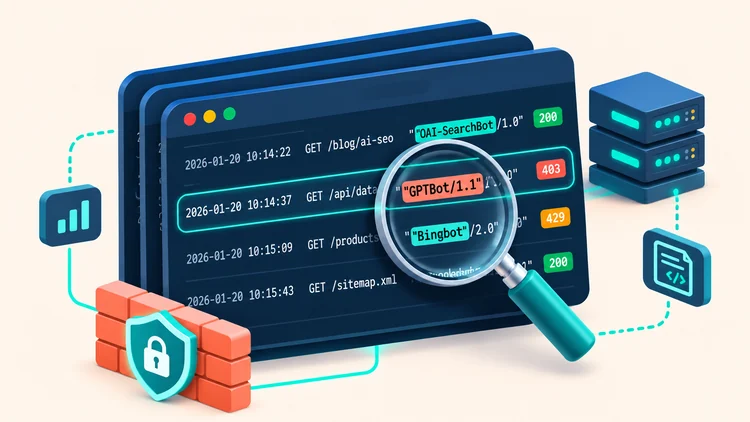
- Indexability: check robots directives, status codes, mobile usability, rendered content, sitemap inclusion, and internal links.
There is no special schema markup required for Google's AI Overviews or AI Mode. Valid structured data may support appropriate search features, but does not guarantee a rich result or an AI citation.
8. Run a Practical Publication and QA Workflow
- Research: confirm intent and inspect existing URLs.
- Approve the map: choose the pillar, unique clusters, and priority order.
- Write the brief: identify evidence, editorial owner, and desired reader outcome.
- Draft and verify: produce original content and review substantive claims.
- Implement: set title, meta description, headings, links, relevant schema, and language annotations.
- Review: verify URLs, canonical tags, mobile rendering, link destinations, and duplicate risks.
- Publish and monitor: record the date, page owner, baseline metrics, and refresh trigger.
Acceptance checklist: unique page purpose; title matches intent; factual statements verified; links functional; relevant media accessible; no accidental noindex; correct canonical and language signals; structured data matches visible content; CTA is useful rather than intrusive.
9. Measure Performance by Page and by Hub
| Measurement | Source / method | Interpretation |
|---|---|---|
| Organic impressions, clicks, CTR | Google Search Console | Compare matched periods and track page/query changes |
| Organic engagement and conversions | GA4 and CRM where configured | Evaluate meaningful actions, not traffic alone |
| Indexation and technical quality | Search Console, crawling, server logs | Identify discoverability or template problems |
| AI Search visibility | Available platform reporting and repeatable prompt snapshots | Record platform, country, date, prompt, model/mode when known, and cited URLs |
| Content maintenance | Editorial tracker | Track stale claims, broken links, and overdue updates |
When AI answers cite your site without generating a visit, do not treat a snapshot citation as an attributed conversion. AI visibility observations are sample-dependent, and changes can reflect platform behavior, location, personalization, or test conditions.
10. Example: An AI Search Content Hub for VIET SEO
A practical planning example for a digital marketing agency could use the pillar SEO & AI Search Optimization and clusters on technical SEO, AEO/GEO measurement, structured data, internal linking, content governance, and AI citation corrections. A commercial service page can explain audit scope and reporting without being forced into an informational article template.
For a Vietnamese–English site, each language version should be professionally reviewed for intent, terminology, and local relevance. Pair equivalent pages with hreflang, keep their canonical URLs consistent with their own language versions, and link to the corresponding translation where available.
11. Common Mistakes to Avoid
- Creating dozens of thin cluster pages just to cover keyword variants.
- Copying the same summary and FAQ across all pages.
- Canonicalizing unique cluster pages to a broad pillar.
- Adding FAQ or Product structured data that does not match the page type.
- Assuming structured data or an AI-friendly paragraph guarantees inclusion in AI answers.
- Evaluating performance immediately after publication without accounting for reporting delays and normal variation.
- Publishing without an owner responsible for corrections and updates.
Frequently Asked Questions
How many cluster pages should a pillar have?
There is no fixed number. Create as many distinct, valuable resources as the topic and audience justify. A small, well-maintained hub is often preferable to a large collection of overlapping pages.
Should cluster pages canonicalize to the pillar?
Normally, no. If a cluster provides unique content and is intended to appear independently in search results, it should usually have its own canonical URL.
Does a Content Hub guarantee citations in AI answers?
No. A content hub can help organize useful information and make navigation clearer, but citations depend on each platform's systems and the context of a query.
Is FAQ schema required for AEO/GEO?
No. Add structured data only where it accurately describes the page and serves a supported purpose. There is no special FAQ markup requirement for AI Overviews or AI Mode.
When should cluster content be refreshed?
Refresh when facts, products, policies, search intent, or user needs change. Use a documented review cadence and prioritize pages with material outdated information or declining usefulness.
Conclusion
A successful pillar–cluster Content Hub is an editorial and technical system, not a link-building formula. Start with real customer questions, map unique page purposes, create evidence-backed resources, connect them naturally, check technical implementation, and measure business results alongside search visibility. Improve the hub continuously as the audience and search ecosystem evolve.


Questions & Comments
You can ask a question about this article. Viet SEO will review and reply after moderation.