Why SEO Is Important in 2026: Benefits, AI Search and Strategy
The way people search for information, compare providers, evaluate products, and make purchasing decisions continues to change. Customers may discover a business through traditional organic results, Google Maps, product listings, images, videos, AI-generated search experiences, or recommendations connected to a broader search journey.
For businesses, search visibility is therefore no longer limited to ranking a single page for a single keyword. A modern SEO strategy helps a company become discoverable across the different search experiences its customers use while building a website that is technically accessible, informative, trustworthy, and easy to use.
SEO can support long-term business growth by attracting relevant visitors, strengthening brand awareness, improving content quality, and reducing overdependence on paid acquisition channels.
This guide explains why SEO remains important in 2026, what benefits it can provide, how AI-powered search is changing optimization, and what businesses should consider before investing in an SEO strategy.
What Is SEO?
SEO, or Search Engine Optimization, is the process of improving a website and its content so that search engines can discover, understand, index, and present it for relevant searches.
Effective SEO considers both search engines and the people using them. It combines:
- Technical website improvements.
- Search-intent research.
- Content planning and creation.
- Website architecture.
- Internal linking.
- Page experience and performance.
- Digital reputation and authority.
- Local business optimization.
- Measurement and ongoing improvement.
SEO is not simply the practice of inserting keywords into pages or acquiring as many backlinks as possible. Its broader purpose is to help the right audience find useful content and complete meaningful actions on the website.
How Do Search Engines Work?
Search engines generally perform three major functions.
1. Crawling
Automated crawlers discover publicly accessible pages through links, sitemaps, previously known URLs, and other signals.
2. Indexing
The search engine processes the page and evaluates information such as:
- Main content.
- Page title.
- Headings.
- Images and video.
- Structured data.
- Links.
- Canonical signals.
- Language and topic.
A page must generally be accessible and eligible for indexing before it can appear in ordinary organic results or as a supporting source in Google’s AI-powered search features.
3. Serving and Ranking
When a user performs a search, ranking systems evaluate available content and attempt to present relevant and useful results.
Ranking is influenced by many systems and signals. No single keyword, backlink, page-speed score, domain age, or content length guarantees a top position.
SEO vs. Paid Advertising
SEO and paid advertising are not direct substitutes. They have different strengths and can work together within the same marketing strategy.
| Factor | SEO | Paid Advertising |
|---|---|---|
| Visibility | Earned through content, technical quality, relevance, and authority | Purchased through campaign bidding and budget |
| Speed | Usually requires time to produce measurable results | Can generate visibility shortly after campaign launch |
| Traffic cost | No fee is paid to Google for each organic click, but strategy and maintenance require investment | Traffic generally depends on continuing advertising expenditure |
| Control | Limited direct control over ranking and appearance | Greater control over targeting, budget, creative, and landing pages |
| Long-term value | Content and technical improvements may continue providing value | Campaign traffic commonly declines when spending stops |
Paid advertising can be useful for product launches, promotions, testing offers, and generating immediate demand. SEO is often more appropriate for building cumulative visibility and reducing dependence on paid clicks over time.
A balanced strategy may use paid campaigns to generate short-term traffic while SEO develops a stronger long-term acquisition channel.
Why SEO Is Important for Businesses in 2026
1. Help Customers Discover Your Business
People frequently use search when they need to solve a problem, compare alternatives, check a company, find a nearby provider, or purchase a product.
SEO helps a business become visible during these decision-making moments.
Potential search surfaces include:
- Traditional web results.
- Google Maps and local results.
- Images.
- Videos.
- Product results.
- News results.
- Featured snippets.
- AI Overviews and AI Mode.
A business does not need to appear in every search feature. It should focus on the experiences relevant to its audience, industry, content, and commercial objectives.
2. Attract Relevant Search Demand
SEO can connect a business with people who are already expressing a need through their searches.
Search intent may be:
- Informational: The user wants to learn or solve a problem.
- Commercial: The user is comparing products, services, or providers.
- Transactional: The user is prepared to purchase, book, register, or request a quotation.
- Navigational: The user is trying to find a particular company, page, or platform.
- Local: The user is looking for an option within a geographic area.
Understanding intent helps businesses create the right page for each stage of the customer journey instead of directing every search to the homepage.
3. Build Brand Awareness
A person may encounter a brand several times before becoming a customer.
Consistent search visibility across helpful articles, product pages, local results, comparison content, and branded searches can strengthen familiarity.
SEO can support brand awareness by helping a business appear for:
- Industry problems.
- Product categories.
- Service comparisons.
- Local searches.
- Questions customers ask before purchasing.
- The company’s own brand and product names.
4. Create a Long-Term Digital Asset
A useful page can continue attracting visitors after its initial publication. Its value may increase as the content is improved, linked internally, cited externally, and updated with new expertise.
SEO investments can contribute to reusable business assets such as:
- Product and service pages.
- Research and guides.
- Knowledge bases.
- Case studies.
- Videos and images.
- Technical website infrastructure.
- Brand authority.
Organic visibility is not permanent. Rankings can change because of competitors, outdated content, technical problems, market changes, or search-system updates. SEO assets require maintenance.
5. Reduce Dependence on Paid Acquisition
A business relying entirely on advertising may become vulnerable to:
- Increasing click costs.
- Budget reductions.
- Account restrictions.
- Platform policy changes.
- Campaign competition.
SEO can diversify customer acquisition. It does not eliminate the need for advertising, but it can help create a more balanced marketing system.
6. Support the Entire Customer Journey
SEO is often associated only with attracting new visitors, but optimized content can support every stage of the buying process.
Awareness Stage
- Educational articles.
- Explanations.
- Problem-solving guides.
- Introductory videos.
Consideration Stage
- Comparison pages.
- Case studies.
- Feature explanations.
- Pricing guidance.
- Frequently asked questions.
Decision Stage
- Service pages.
- Product pages.
- Local landing pages.
- Quotation forms.
- Booking and checkout pages.
Post-Purchase Stage
- Setup documentation.
- Support articles.
- Troubleshooting guides.
- Maintenance instructions.
7. Improve Website Quality
A complete SEO program frequently uncovers website problems that affect both search engines and customers.
These may include:
- Broken links.
- Duplicate pages.
- Slow templates.
- Incorrect redirects.
- Missing page titles.
- Weak navigation.
- Unclear content.
- Unusable mobile forms.
- Indexing problems.
- Inaccessible images or controls.
Correcting these problems can improve user experience even when ranking changes are not immediate.
8. Support Local Business Growth
Local SEO helps businesses become visible to customers searching within a city, district, or service area.
It is particularly relevant to:
- Restaurants and cafés.
- Clinics and healthcare providers.
- Hotels.
- Retail stores.
- Professional services.
- Repair and home services.
- Schools and training centers.
A local SEO strategy may include:
- Accurate business information.
- A verified Google Business Profile.
- Relevant service and location pages.
- Customer reviews.
- Local links and citations.
- Consistent phone, address, and opening-hour information.
- Useful photographs and service details.
Businesses should not create large numbers of nearly identical location pages without genuine local value.
9. Support International Expansion
SEO can help businesses reach customers in different languages and countries when international websites are planned correctly.
Important considerations include:
- High-quality translation and localization.
- Market-specific keyword research.
- Clear regional URLs.
- Correct hreflang implementation.
- Local currencies and contact details.
- Regional legal and delivery information.
- Local search behavior.
Direct machine translation without local review may create inaccurate, unnatural, or misleading content.
10. Provide Measurable Business Data
SEO performance can be measured through tools such as Google Search Console, analytics platforms, customer relationship management systems, call tracking, and ecommerce reporting.
Useful measurements may include:
- Impressions.
- Clicks.
- Organic sessions.
- Qualified leads.
- Sales and revenue.
- Bookings.
- Phone calls.
- Assisted conversions.
- Search visibility by topic.
- Indexing coverage.
- Core Web Vitals.
Traffic alone is not a sufficient measure of success. A smaller number of relevant visitors may produce more business value than a large amount of unrelated traffic.
How AI-Powered Search Changes SEO
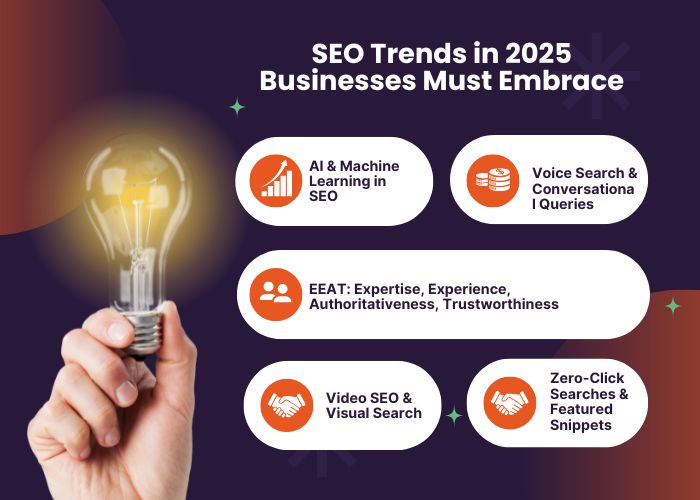
Google Search now includes AI-powered experiences such as AI Overviews and AI Mode for certain searches. These experiences may combine information from several sources and provide links that allow users to explore supporting pages.
This changes how information may be discovered, but it does not eliminate the foundations of SEO.
There Is No Separate AI Shortcut
Google states that no additional technical requirements or special markup are necessary merely to appear as a supporting link in AI Overviews or AI Mode.
The underlying requirements remain familiar:
- The page must be crawlable.
- The page must be indexed.
- The page must be eligible to appear with a search snippet.
- The content should be useful, reliable, and people-first.
- The website should comply with Search policies.
Create Content That Supports Complex Questions
AI-powered search may be used for questions involving comparison, reasoning, planning, and exploration.
Businesses can create stronger content by:
- Answering the main question clearly.
- Covering important related subtopics.
- Explaining trade-offs and limitations.
- Providing original examples and evidence.
- Using descriptive headings.
- Connecting related pages through internal links.
- Providing useful images, tables, and video.
Do Not Create Content Only for AI Systems
Content should first serve the user. Pages written solely to manipulate AI citations or repeat predictable questions may add little value.
Search visibility is more likely to be sustainable when the website offers information that is difficult to reproduce without the company’s actual knowledge, data, experience, or service expertise.
People-First Content and E-E-A-T
E-E-A-T refers to:
- Experience.
- Expertise.
- Authoritativeness.
- Trustworthiness.
E-E-A-T is not a single ranking score that can be added to a page through a plugin. It is a framework used in Google’s quality evaluation guidance and can help publishers assess whether their content demonstrates credibility and genuine value.
Demonstrate First-Hand Experience
Depending on the topic, useful evidence may include:
- Original photographs.
- Project examples.
- Test results.
- Case studies.
- Product demonstrations.
- Lessons learned from implementation.
- Specific industry observations.
Identify Authors and Reviewers
For content where authorship matters, provide:
- Author name.
- Relevant qualifications.
- Professional experience.
- Review process.
- Publication and update dates.
Support Factual Claims
Link to relevant primary sources, official documentation, original research, or reliable industry materials.
Avoid repeating statistics that cannot be traced to a credible source.
Provide Business Transparency
Trust can also be supported through:
- Clear company details.
- Contact information.
- Privacy and terms pages.
- Return and refund policies.
- Editorial policies.
- Correction procedures.
- Secure website connections.
Using Generative AI for SEO Content
Generative AI can assist with research, organization, ideation, summaries, and drafting. However, publishing large volumes of automatically generated content without meaningful review or original value can create quality and spam-policy risks.
Appropriate Uses of AI
- Organizing research notes.
- Generating alternative outlines.
- Identifying unanswered customer questions.
- Improving grammar and clarity.
- Creating structured drafts for expert review.
- Assisting with repetitive content operations.
Risks of Unreviewed AI Content
- Incorrect facts.
- Invented sources.
- Outdated recommendations.
- Generic language.
- Duplicated ideas.
- Inconsistent brand voice.
- Legal or safety issues.
- Large amounts of low-value content.
Every AI-assisted page should be checked for accuracy, originality, usefulness, tone, and compliance before publication.
Technical SEO in 2026
High-quality content cannot perform well if search engines cannot reliably access and understand it.
Crawlability and Indexability
Check:
- Robots.txt rules.
- Meta robots directives.
- HTTP response codes.
- Canonical tags.
- XML sitemaps.
- Internal links.
- Authentication barriers.
- JavaScript rendering.
Website Architecture
Important pages should be accessible through logical internal navigation.
A good structure helps:
- Visitors understand the website.
- Search engines discover pages.
- Authority flow between related content.
- Businesses avoid orphan pages.
Canonicalization and Duplicate Content
Duplicate and near-duplicate URLs may be created by:
- Tracking parameters.
- Product filters.
- Sorting options.
- HTTP and HTTPS versions.
- www and non-www versions.
- Printer pages.
- Session identifiers.
Use redirects, canonical tags, internal-link consistency, and controlled URL generation to consolidate signals.
Structured Data
Structured data can help search engines understand specific content types and may make pages eligible for supported search appearances.
Relevant types may include:
- Product.
- Organization.
- LocalBusiness.
- Article.
- BreadcrumbList.
- VideoObject.
- Event.
- JobPosting.
Structured data must accurately represent visible page content. It does not guarantee a rich result.
Page Experience and Core Web Vitals
Core Web Vitals measure important aspects of real-world page experience:
- Largest Contentful Paint: Loading performance.
- Interaction to Next Paint: Responsiveness.
- Cumulative Layout Shift: Visual stability.
Good Core Web Vitals can support a better user experience, but perfect scores do not guarantee top rankings.
Businesses should also evaluate:
- Mobile usability.
- HTTPS.
- Intrusive overlays.
- Readable content.
- Accessible navigation.
- Stable forms and checkout.
- Server reliability.
Voice and Conversational Search
Voice search remains relevant in contexts such as mobile assistants, local searches, navigation, and smart devices. However, businesses should avoid relying on unsupported predictions about what percentage of all searches are voice-based.
Optimizing for conversational searches does not require a separate voice-search SEO system.
Useful practices include:
- Answering customer questions clearly.
- Using natural language.
- Creating local business information.
- Providing concise answers followed by supporting detail.
- Using descriptive headings.
- Keeping content easy to access on mobile devices.
Video, Image, and Multimodal SEO
Search is increasingly visual. Businesses can strengthen visibility by treating images and video as searchable content rather than decoration.
Image SEO
- Use descriptive filenames.
- Write accurate alternative text.
- Place images near relevant text.
- Use suitable dimensions and quality.
- Provide responsive image sizes.
- Avoid embedding important text only inside images.
Video SEO
- Create a dedicated watch page when appropriate.
- Use a descriptive title and summary.
- Provide captions or transcripts.
- Use a clear thumbnail.
- Add supported video structured data.
- Ensure Google can access the video and thumbnail.
Embedding a video alone does not guarantee search visibility. The surrounding page should provide useful context.
Search Features and Fewer-Click Journeys
Some searches may be satisfied directly on the results page through maps, featured snippets, calculators, business information, product details, or AI-generated answers.
This does not mean SEO has become irrelevant. It means businesses should evaluate value beyond simple click volume.
Potential outcomes include:
- Brand exposure.
- Phone calls.
- Map directions.
- Store visits.
- Product discovery.
- Later branded searches.
- Clicks from users seeking greater detail.
Businesses should still create content worth visiting by offering depth, tools, original evidence, services, products, or experiences that cannot be completed entirely on the search-results page.
How to Measure SEO Success
SEO reporting should connect search performance to business outcomes.
Visibility Metrics
- Impressions.
- Clicks.
- Average search position.
- Queries and pages receiving visibility.
- Local profile views and actions.
Engagement Metrics
- Engaged sessions.
- Content consumption.
- Internal navigation.
- Video engagement.
- Return visits.
Business Metrics
- Qualified leads.
- Phone calls.
- Bookings.
- Orders.
- Revenue.
- Lead quality.
- Customer acquisition cost.
- Assisted conversions.
Technical Health Metrics
- Indexed pages.
- Crawl errors.
- Core Web Vitals.
- Broken links.
- Server errors.
- Structured-data validity.
Rankings should be interpreted as one diagnostic indicator rather than the only definition of SEO success.
How Long Does SEO Take?
There is no universal timeline.
Results depend on factors such as:
- Website history.
- Current technical condition.
- Competition.
- Content quality.
- Industry.
- Available resources.
- Brand reputation.
- Search demand.
- Implementation speed.
Technical corrections may produce visible changes relatively quickly, while building authority for competitive commercial topics may require sustained work.
Be cautious of providers guaranteeing a specific ranking or an exact result date.
When SEO May Not Be the First Priority
SEO is useful for many businesses, but it is not automatically the best first investment in every situation.
Another priority may come first when:
- The business has no validated product-market fit.
- The website cannot process enquiries or purchases reliably.
- There is almost no search demand for the offer.
- The product is highly time-sensitive and requires immediate exposure.
- The company cannot fulfill additional demand.
- The website has serious legal, security, or payment problems.
In these cases, businesses may need to improve the offer, operations, website, tracking, or paid acquisition before scaling SEO.
Why Work with a Professional SEO Agency?
An experienced SEO agency can coordinate the technical, content, analytical, and strategic work required across a website.
Technical Expertise
An agency can identify issues involving crawling, indexing, JavaScript, redirects, canonicalization, performance, structured data, and website migrations.
Content Strategy
A structured plan can connect search intent with service pages, product pages, educational content, local pages, and conversion paths.
Cross-Functional Coordination
SEO frequently requires collaboration between:
- Business owners.
- Developers.
- Designers.
- Writers.
- Subject-matter experts.
- Sales teams.
- Data analysts.
Measurement and Reporting
A professional provider should define measurable objectives and explain how activities connect to business results.
How to Choose an SEO Agency
Before selecting a provider, ask:
- How will you learn about our customers and business goals?
- What technical issues will you evaluate?
- How will content topics be selected?
- Who creates and reviews the content?
- How do you approach AI-assisted content?
- Which metrics will be reported?
- How will leads and revenue be measured?
- What access will you need?
- Who owns the website content and accounts?
- How do you approach link acquisition?
- How will you communicate risks and limitations?
SEO Agency Warning Signs
- Guaranteed number-one rankings.
- Promises of immediate results for competitive terms.
- Secret methods that cannot be explained.
- Large-scale low-quality link packages.
- Thousands of automatically generated pages.
- Reporting only rankings without business outcomes.
- Refusal to provide account access or ownership.
- Recommendations that violate search-engine policies.
SEO Checklist for Businesses in 2026
Strategy
- Business objectives are defined.
- Target customers are understood.
- Search intent has been researched.
- Priority products and services are identified.
- SEO goals connect to measurable outcomes.
Technical SEO
- Important pages are crawlable and indexable.
- Canonical tags are correct.
- Redirects work properly.
- XML sitemaps contain valid canonical URLs.
- Internal links connect important content.
- Mobile content is complete.
- Core Web Vitals are monitored.
- Structured data represents visible content accurately.
Content
- Every page has a clear purpose.
- Content matches search intent.
- Claims are supported.
- Authors or reviewers are identified where relevant.
- Content includes genuine business expertise.
- Outdated pages are reviewed.
- AI-assisted content receives human verification.
Local SEO
- Business information is accurate.
- Opening hours are current.
- Service areas are clear.
- Reviews are monitored and answered.
- Local landing pages provide genuine value.
Measurement
- Search Console is configured.
- Analytics tracking works.
- Forms, calls, bookings, and sales are measured.
- Organic leads can be evaluated for quality.
- Reports explain business outcomes, not only traffic.
Frequently Asked Questions About SEO
Is SEO Still Important in 2026?
Yes. People continue to use search to discover information, businesses, products, services, images, videos, and local providers. However, SEO now covers more search experiences than traditional blue links alone.
Is SEO Dead Because of AI?
No. AI-powered search changes how some answers are presented, but the systems still rely on accessible, indexed, and useful web content. Businesses should strengthen foundational SEO rather than pursue shortcuts designed only for AI citations.
Do I Need Special Schema for AI Overviews?
No special structured-data type is required merely to appear as a supporting link in AI Overviews or AI Mode. Use supported structured data only when it accurately matches the visible content.
Is Paid Advertising Better Than SEO?
Neither channel is universally better. Advertising can provide rapid visibility and precise campaign control, while SEO can build cumulative organic visibility. Many businesses benefit from using both.
Is SEO Free?
Search engines do not charge a fee for an ordinary organic click. However, SEO requires investment in strategy, development, content, tools, research, and maintenance.
How Long Does SEO Take to Work?
The timeline varies according to the website, competition, implementation quality, resources, and business market. No responsible provider can guarantee an exact date for top rankings.
Does SEO Guarantee Sales?
No. SEO can attract relevant visitors, but sales also depend on the offer, price, brand trust, landing-page quality, customer service, and conversion process.
How Often Should SEO Content Be Updated?
Update content when facts, products, services, search intent, regulations, or customer needs change. Do not change publication dates or rewrite pages merely to create an appearance of freshness.
Are Backlinks Still Important?
Relevant links and mentions can help search engines and users discover and evaluate content. Quality, context, and legitimacy matter more than purchasing a large number of low-quality links.
Does Website Speed Affect SEO?
Page experience and Core Web Vitals are among the signals considered by Google’s systems. However, perfect performance scores do not guarantee top rankings, and relevant content remains essential.
Should Every Business Invest in SEO?
Most businesses can benefit from basic search visibility and technical quality. The appropriate investment level depends on search demand, competition, business capacity, customer acquisition strategy, and expected return.
Can I Do SEO Myself?
Business owners can handle foundational tasks such as improving page titles, publishing useful content, maintaining business information, and monitoring Search Console. Complex technical sites, migrations, competitive markets, and large content programs may require specialist support.
Conclusion
SEO in 2026 is not limited to achieving a high ranking for a small list of keywords. It is the broader process of making a business discoverable, understandable, trustworthy, and useful throughout modern search experiences.
A strong SEO strategy can help businesses:
- Reach relevant customers.
- Build brand awareness.
- Create long-term content assets.
- Reduce dependence on paid traffic.
- Improve website quality.
- Support local and international growth.
- Measure demand and customer behavior.
- Adapt to AI-powered search.
SEO does not guarantee rankings, traffic, leads, or revenue. Sustainable results require accurate technical implementation, useful content, genuine expertise, realistic expectations, and continuous improvement.
VietSEO provides SEO strategy, technical audits, content planning, local SEO, ecommerce SEO, international SEO, performance optimization, and search measurement for businesses in Vietnam and international markets.
To discuss an SEO strategy tailored to your business goals, contact VietSEO at +84 917 212 969.


Questions & Comments
You can ask a question about this article. Viet SEO will review and reply after moderation.