VIET SEO / INSIGHTS
Crisis response playbook when AI cites incorrect information from your website
A practical playbook for owners, content, SEO, PR, legal and engineering teams to respond when AI platforms misquote or reproduce incorrect website information.
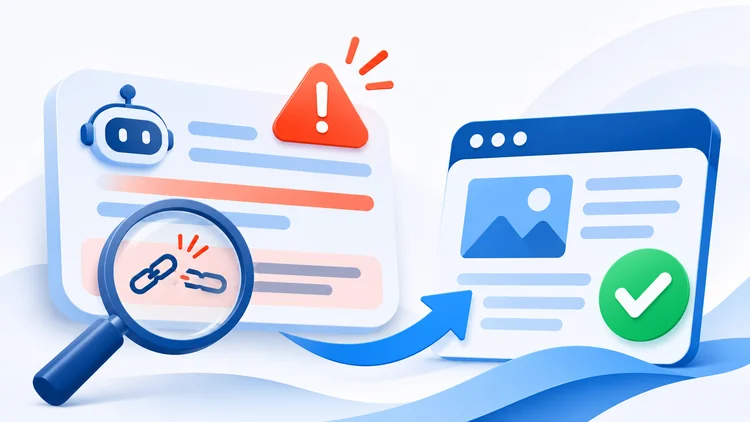
Purpose: deliver an actionable crisis playbook for detecting, documenting and correcting instances where generative AI (e.g., ChatGPT, Google AI) cites or reproduces inaccurate information about your products or services, minimizing legal exposure and reputational harm.
1. Cross-functional roles
- Business leadership: approve strategy and public statements.
- Content team: verify sources, correct canonical content, prepare evidence.
- SEO / AEO & GEO team: update structured data, trust signals and prioritize answerable pages.
- PR / Comms: draft press statements, customer notices and internal scripts.
- Legal: assess regulatory or liability risk and prepare evidence checklist for escalation.
- Engineering: capture snapshots, deploy content fixes, and coordinate with AI vendors.
2. Real-time playbook (on detection)
- Record immediately: capture a screenshot of the AI response with timestamp, save any query URL, conversation or request ID if provided by the platform.
- Capture provenance: save any links or citations the AI includes; if none, copy the exact quoted text.
- Initial triage: classify impact (Low / Medium / High) based on reputational, safety or legal risk.
- Trigger response team: notify stakeholders via predefined internal channel and assign verification tasks with a 1-hour SLA for initial findings.
Evidence checklist
- Timestamped snapshot of AI response.
- Query URL or platform identifier and session/conversation ID (if available).
- Exact text of the AI answer and the incorrect claim.
- Your website source URL(s) and pre/post-fix snapshots.
- Relevant analytics logs (subject to internal data-sharing rules).
- Customer complaints, social posts or press items relating to the incident.
3. Impact assessment
- Determine citation reach: frequency in monitoring sample, social amplification, related support tickets.
- Assess business impact: request analytics team to compare traffic and conversion patterns for the affected window; avoid asserting numerical effects before verification.
- Classify legal exposure: false claims about safety, efficacy, compliance, or contractual terms—seek legal sign-off prior to public reaction.
4. Technical remediation steps
- Correct canonical content: update the authoritative page and document amendments with timestamps.
- Surface clear sources: add or highlight authoritative references (technical docs, datasheets, regulatory pages) adjacent to the corrected text.
- Structured data: add/adjust schema (FAQ, Product, Claim) to give explicit context for answer engines. Note: validate after deployment.
- Trust signals: include author attribution, last updated date, and third-party citations where relevant.
- AEO/GEO tactics: create concise Q&A variants that directly answer the question the AI misrepresented to increase chance of correct sourcing.
5. Communications & correction messaging
- Internal first: alert sales, support, legal and leadership before public statements.
- Minimal correction template (concise):
We identified an inaccurate statement about [issue] appearing in an AI response on [timestamp]. The correct information is: [brief correction]. We have updated our authoritative source and contacted the platform. For direct confirmation, please contact [support channel].
- Update FAQ and customer guidance pages with the corrected Q&A and contact points for concerns.
6. Working with third parties and takedown criteria
- Prepare evidence packet: include snapshots, timestamps, conversation IDs and clear explanation of harm (legal or commercial).
- Takedown/edit request criteria to consider:
- Content poses safety or regulatory risk.
- Content causes demonstrable financial harm backed by evidence.
- Content is widely redistributed or reused across platforms.
- Use official vendor support channels first; escalate to legal if necessary. Do not claim guaranteed response times without vendor confirmation.
7. After-action and prevention
- Document lessons learned and update the playbook and templates.
- Set up recurring monitoring for priority queries and topics likely to be cited by AI.
- Train content, support and PR teams to author clear, sourced answers that reduce the chance of misquotation.
Editor verification notes
- Certain remediation outcomes require access to internal analytics and vendor responses—those facts should be verified before public reporting.
- Do not state platform-specific response behaviors without confirmed correspondence from the provider.
Summary: This playbook prioritizes fast evidence capture, a clear triage path, technical corrections to canonical sources, communication templates and a set of criteria for engaging AI vendors. Implementation details and quantitative impacts must be collected and validated by internal teams before escalation or public disclosure.



Questions & Comments
You can ask a question about this article. Viet SEO will review and reply after moderation.